Plant floor
Why nobody on the shop floor believes the plant dashboard
A plant metric the floor doesn’t trust is worse than having none. The fix is mostly about who defines the numbers and who owns them, not new sensors.
Anyone who has run a plant knows this meeting. The dashboard says OEE is 68%. The shift lead says that’s rubbish: take out the changeovers nobody logs and the short stops that never reach the system, and it’s closer to 80.
Both sides walk out sure the other one is fiddling the numbers. The metric was supposed to end that argument. Now it is the argument.
And it doesn’t stop at one bad meeting. Once people on the floor think a number is wrong, maintenance and quality and planning all start quietly discounting it. Decisions go back to gut feel, and the plant keeps paying for a dashboard nobody reads.
Downtime gets defined after it happens
A five-minute changeover is an unplanned stop on one shift and planned maintenance on the next. Not because anyone is lying. The reason-code list is either too vague or too long to use consistently when the line is down and people are busy.
So every red cell turns into a debate about which box it belongs in. You never get to the conversation about why it happened.
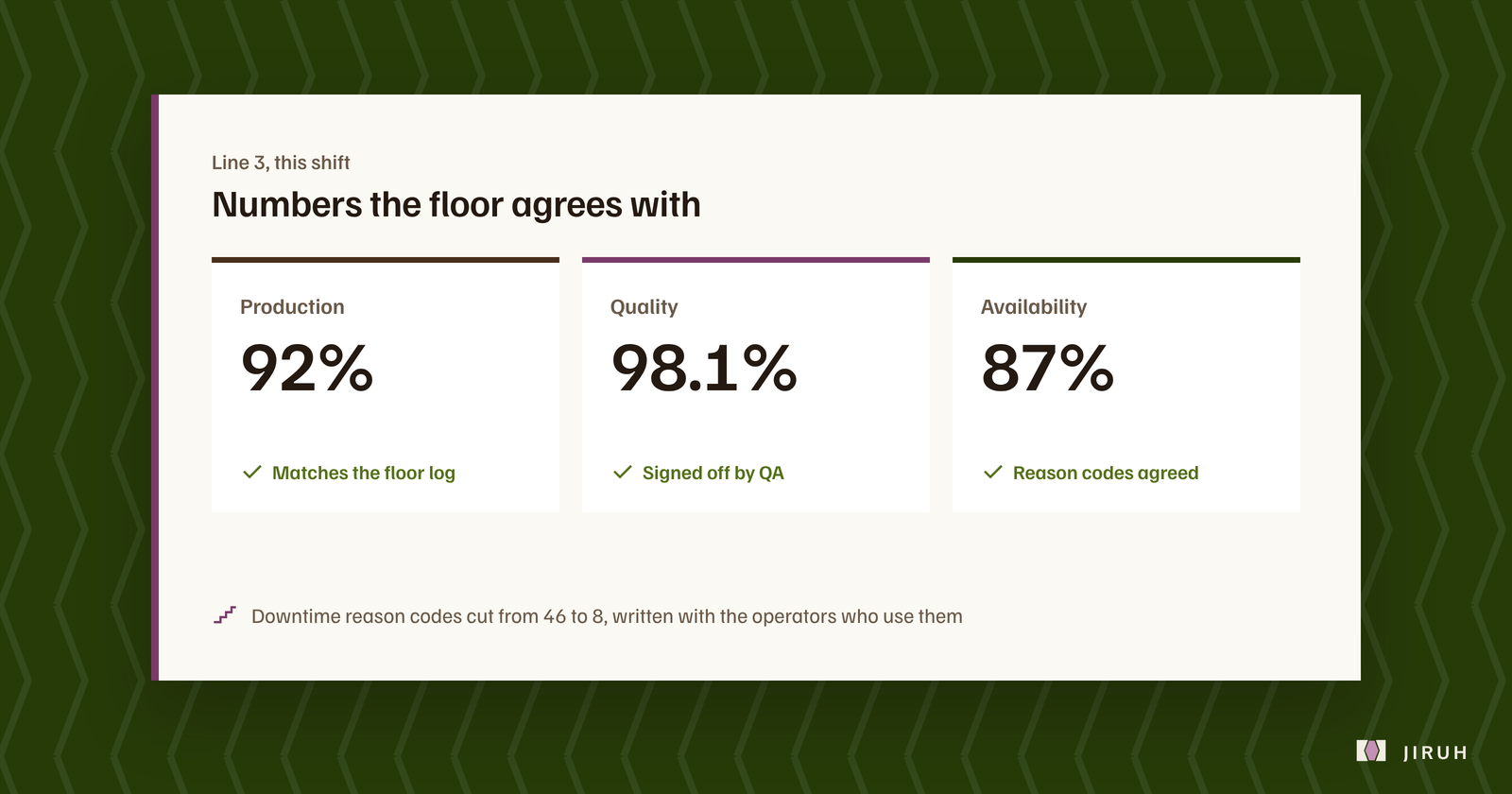
The plants that sort this out cut the list hard. Five to eight codes, in the words operators actually use, not audit language. That one change does more for credibility than any redesign of the charts.
They also decide, in writing, who’s allowed to close a downtime code and how fast. If three different roles can reclassify the same stoppage, you’re back to arguing after the fact.
The number arrives too late
If the dashboard refreshes overnight from a batch job, it’s yesterday’s news by the morning huddle. Old numbers get waved away before anyone checks whether they’re right.
Review it on a rhythm the floor controls. A five-minute look at the start of each shift works better than any overnight refresh.
Nobody on the line owns it
This one does the most damage. If the metric belongs to the plant manager and an analyst somewhere else, nobody with their hands on the line has a reason to defend it or improve it. It stays something that gets reported upward. Nobody on the floor uses it to run the line.
Give it a named owner at shift-lead level, someone expected to explain the number as well as report it, and the conversation changes. People stop asking whether the number is real and start asking how to move it.
Handoffs are where repeat faults hide
A fault gets logged, the line restarts, and three weeks later the same thing trips on a different shift. The original note said the sensor was playing up. It lived in a logbook the next shift never had to read.
Make the handoff a checkpoint. The outgoing lead goes through open flags with the incoming lead, and both confirm it, with a timestamp. It takes two minutes. We’ve written about how that handoff should work in more detail.
None of this is a technology project
Every plant that has rebuilt trust in its numbers did roughly the same things. One short list of codes, used the same way by everyone. A review the floor runs. An owner at shift level.
That’s governance, mostly. Software can enforce those decisions once you’ve made them. It can’t make them for you.
It’s worth doing early, even when it doesn’t look urgent. A plant number that has lost credibility on the floor will eventually turn up in a board pack or a customer quality review. Someone will ask a sharp question about it, and nobody in the room will want to answer.