What a registrar’s office can borrow from a call centre
If a routine re-enrolment request takes three weeks, the work probably isn’t the slow part. The request is waiting somewhere nobody can see.
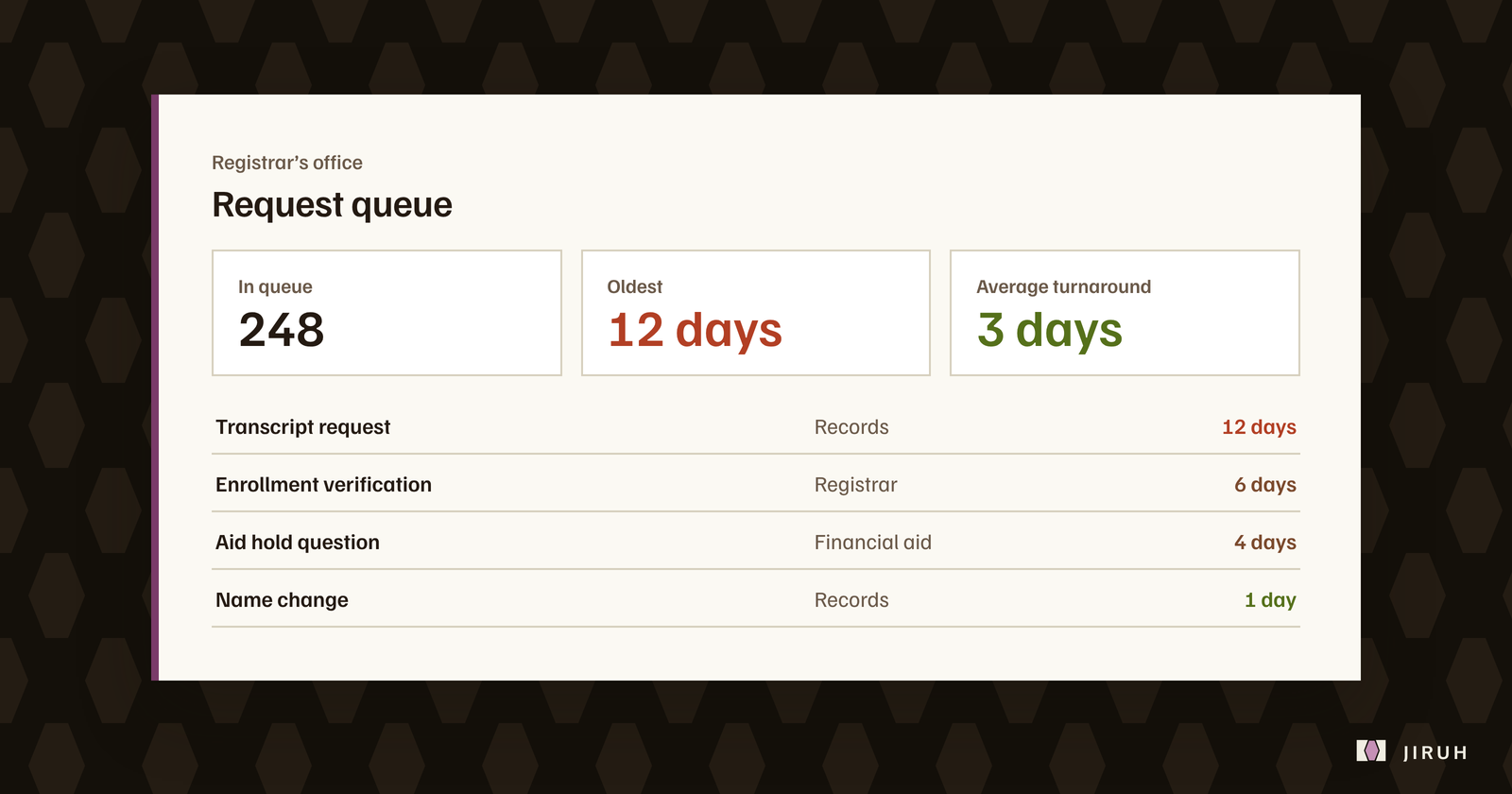
A new provost asks a fair question. Why does a routine re-enrolment request take three weeks?
The honest answer isn’t a good one. It depends which week it is, who saw the email first, and whether it had to go over to financial aid. Nobody can give a number, because there’s nothing to read it from.
Where the requests come from
One re-enrolment request might come in through the student portal, a visit to the front desk, the general admissions inbox, or a phone call that never got written down.
Each of those gets tracked differently: a spreadsheet tab, a sticky note, a pile of printed forms. So nobody, including the people doing the work, knows how big the backlog really is.
Put every request of that type into one queue, however it arrived. That’s the first fix, and the others depend on it.
The real bottleneck is next door
Most stuck re-enrolments aren’t stuck in the registrar’s office at all. They’re stuck at the boundary with financial aid, waiting for someone on either side to notice they’ve been handed over.
Give that one handoff a named owner and a visible deadline. That’s where most of the three weeks goes, and you don’t need extra staff to fix it.
Pilot one request type
Registrar offices are right to be wary of big changes, especially just before peak enrolment. So don’t do everything at once.
Pick one request type, whichever has the most volume, whether that’s re-enrolment, transcripts or enrolment verification. Pull its intake together, put deadlines on its handoffs, and let it run.
When that request type goes from three weeks to a few days, you have something concrete to show people. That makes a much better case for the next one than a promise that things will get faster.
The bigger version of this argument, across hospitals and city offices too, is in the queue your office doesn’t know it’s running.