FERPA audits are about the paper trail
Most registrar offices handle records requests correctly. Where they come unstuck is proving it, with a complete log of who asked, who approved and what was released.
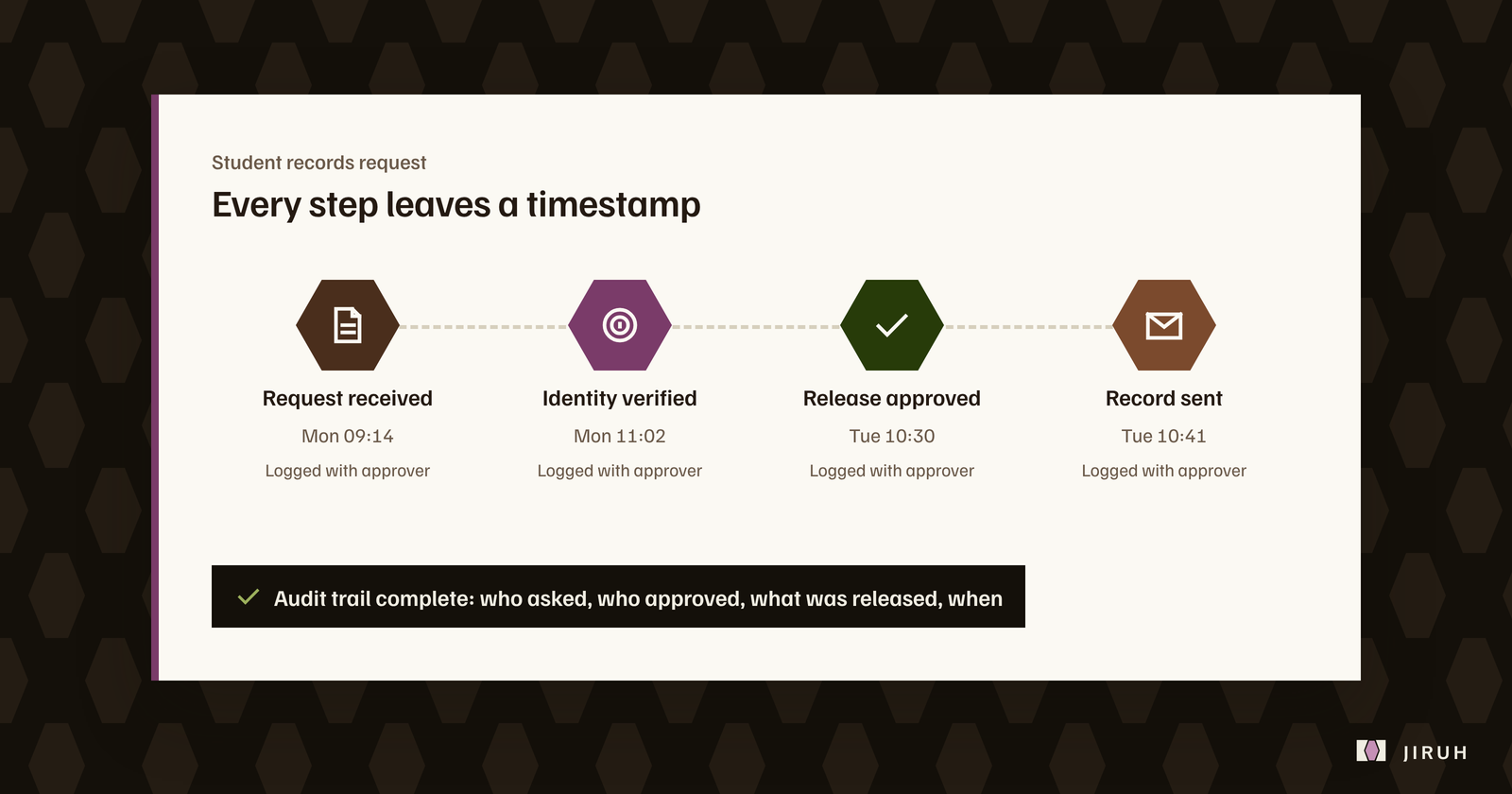
Most registrar offices get the substance of a student records request right. The trouble starts when someone asks them to show it.
Who asked for access? Who approved the release? When? In a manual process, the answers live in email threads, sticky notes and a shared spreadsheet three people update in three different ways.
What the regulation actually asks for
FERPA’s record-keeping rule, 34 CFR § 99.32, requires institutions to keep a record of each request for access to, and each disclosure of, personally identifiable information from a student’s education records. There are exceptions, such as disclosures to the student themselves, to school officials with a legitimate educational interest, and of directory information. Outside those, the record has to exist, and the student has a right to see it.
So an audit isn’t going to second-guess every individual decision. It looks for consistency. Was every request logged? Was every approval recorded? Can you produce the record on demand, or will someone spend a week rebuilding it from memory?
What a routed process gives you
A routed request process logs every step with a time and a name, as part of doing the work. It runs the same approval sequence for every request, whoever submitted it. And when an auditor asks, the log is already there.
It doesn’t mean more people see more data. If anything, a routed process narrows who can see a request at each stage, which is closer to the spirit of FERPA than a shared inbox ever was.
Not every request is routine
Subpoenas, requests involving a minor’s records and disclosures to third parties all come with different rules. Those shouldn’t be approved automatically, and they shouldn’t hold up everything else either.
Ask a few short questions at intake and let the answers decide the route. Routine requests go down the normal path and clear in a day or two. Flagged ones go straight to a named reviewer in legal, so there’s never any doubt about whose desk they’re on.
Routing gets the request to the right person faster. The judgement on hard cases stays with that person.
This is a specific case of a wider problem we cover in the queue your office doesn’t know it’s running.